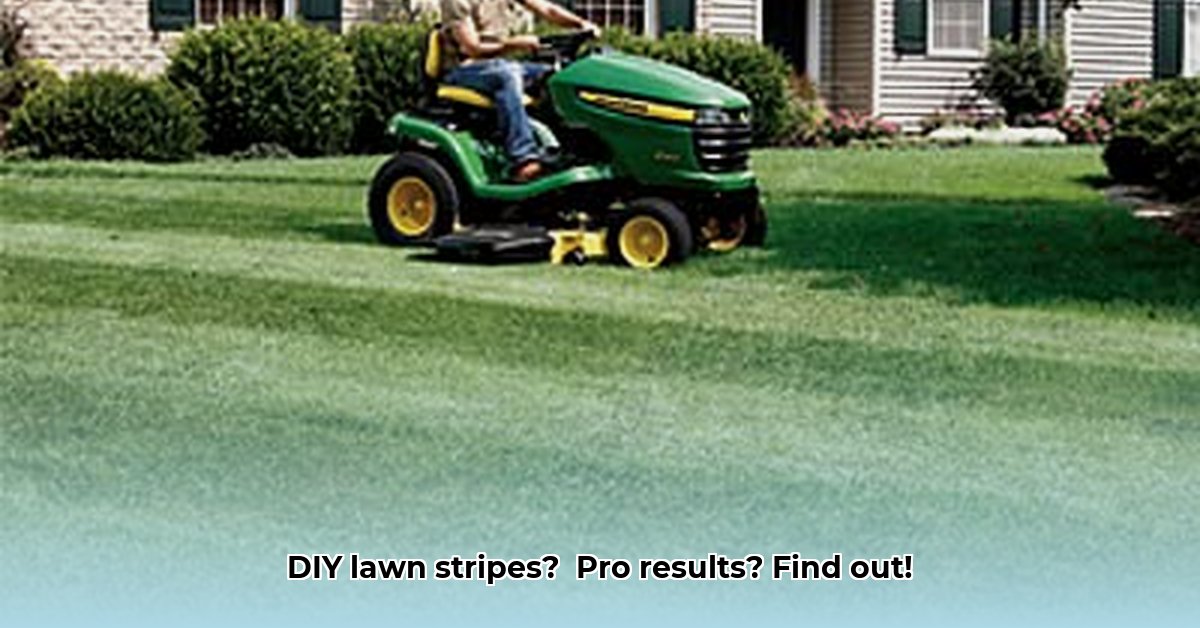
Want a lawn that looks like it belongs on the cover of a magazine? Achieving those sharp, professional-looking stripes is easier than you might think! This guide will walk you through the process of creating perfectly striped grass, comparing the DIY approach with the convenience of using a striping kit. We'll delve into the pros and cons of each method, provide step-by-step instructions, and help you choose the right kit for your yard. Let's get started and transform your lawn! For more on mower blade maintenance, check out this helpful resource: Mower Blade Info.
DIY Lawn Striping: The Manual Method
Creating stripes manually relies on skill and precision. It's a bit like a detailed mowing puzzle, where you're solely using your mower and its path control to create the effect. While achievable, expect softer, less defined stripes compared to using a kit. Think of it as drawing with a broad marker versus a fine-tipped pen—achievable, but requiring much more effort for a less precise result.
Step-by-Step Instructions:
Even First Cut: Mow your entire lawn to a consistent height. Sharp blades are crucial for a clean cut. Dull blades will result in ragged grass, hindering your striping efforts. (Don't skip this step!)
Strategic Overlap: On your second pass, slightly overlap your previous mowing path. This creates the illusion of a stripe. Experiment to find the perfect overlap amount for your mower and lawn type.
Alternating Directions: For each subsequent pass, alternate your mowing direction, maintaining that consistent overlap. Consistent technique is key to a visually appealing striped pattern.
Fine-Tuning: Adjust your mower’s height and blade settings. Lowering the height creates more pronounced stripes, but be cautious not to scalp your grass. Striving for a balanced and healthy lawn is paramount.
Limitations of the Manual Approach: This method is time-consuming, requires significant patience, and the results may lack the crispness of a professionally striped lawn. Multiple practice runs might be necessary to achieve even acceptable results. Are you prepared for this level of commitment?
Lawn Striping Kits: Streamlining the Process
Lawn striping kits offer enhanced precision and consistency, simplifying the creation of professional-looking stripes. They are designed to significantly reduce effort and time, delivering impressive results with noticeably less manual work. Two main types are available: roller kits and non-roller attachments.
Roller Kits: For Crisp, Defined Stripes
Roller kits add a weighted roller to your mower's rear. As you mow, the roller presses down, creating a stark contrast between recently mowed and unmowed areas, resulting in incredibly sharp stripes.
Pros:
- Superior Stripe Definition: Achieve those perfectly defined, magazine-worthy stripes you've always wanted.
- Relatively Easy Installation: Most kits are designed for simple installation, typically involving attaching to your mower's existing components.
- Broad Compatibility: Many roller kits are designed to work with various mower models.
Cons:
- Higher Upfront Cost: These kits tend to be pricier than non-roller options.
- Maintenance Requirements: Like any equipment, periodic cleaning and maintenance are necessary to guarantee optimal performance.
Non-Roller Kits: The Budget-Conscious Choice
Non-roller kits typically employ adjustable deflectors or similar mechanisms to control how cut grass is discharged, indirectly generating the stripes.
Pros:
- Lower Price Point: Generally less expensive than roller kits.
- Simpler Design: Often translates to easier installation and minimal maintenance.
Cons:
- Less Defined Stripes: The stripes created may lack the crispness and definition achieved with roller kits.
- Compatibility Limitations: Compatibility with various mower types might be more restricted.
Choosing the Right Kit: A Personalized Approach
Selecting the ideal striping kit hinges on several crucial factors. Let's explore these considerations to help you make an informed decision:
| Factor | Consideration |
|---|---|
| Lawn Size | Larger lawns may require a more robust, possibly more expensive, kit. |
| Grass Type | Kit compatibility with various grass types is crucial. Check before purchasing. |
| Budget | Kits are available across a wide price range. Set a realistic budget beforehand. |
| Desired Intensity | Do you want subtle stripes or bold, dramatic ones? This influences kit selection. |
Carefully weigh your priorities. Do you need the sharpest possible stripes, or is a great-looking lawn at a reasonable price more important?
Troubleshooting and Maintaining Your Kit
Even the finest equipment needs occasional care. Here are some common issues and their solutions:
Uneven Stripes: Check your mower blades for sharpness and ensure even grass height. Review the kit's installation and adjustments.
Faint Stripes: Consider lowering your cutting height or adjusting the roller weight (if applicable). Experiment to find what yields optimal results for your lawn and equipment.
Kit Malfunction: Consult the manufacturer's instructions or contact their customer support.
Regular cleaning after each use and periodic inspections for damage are crucial for extending the kit’s lifespan and maintaining optimal performance.
Key Takeaways:
- Achieving professional-looking lawn stripes significantly enhances curb appeal.
- The choice between DIY and a striping kit depends on your budget, lawn size, and desired stripe quality.
- Different kit types (roller vs. non-roller) offer distinct advantages and disadvantages.
- Consider lawn size, grass type, budget, and stripe intensity when choosing a kit. Proper maintenance is key to long-lasting results.
By thoughtfully considering your options and selecting the method best suited to your resources and needs, you’ll be well on your way to enjoying a stunning, professionally striped lawn!